
U.S. Indictment Details Caribbean Politicians Tied to Cocaine Trafficking
A sweeping U.S. federal indictment against Venezuelan Dictator Nicolás Maduro has cast renewed scrutiny on alleged corruption involving unnamed Caribbean politicians
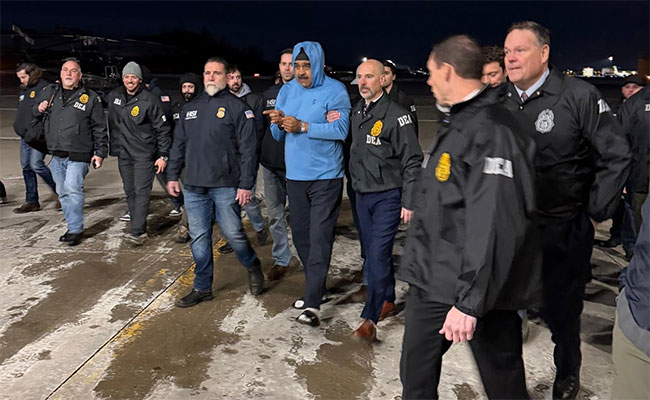
The superseding indictment, filed in the U.S. District Court for the Southern District of New York, accuses Maduro and senior figures within his regime of orchestrating a decades-long narcotics operation that turned Venezuela into a central hub for cocaine trafficking. Prosecutors allege the network relied on corruption at every stage of the supply chain from production in Colombia, to transport through Venezuela, and onward through key transshipment points in the Caribbean and Central America.
Caribbean Route Named in Indictment
While the indictment focuses primarily on Maduro and his inner circle, it also alleges that politicians along the “Caribbean route” were corrupted by cocaine traffickers, accepting drug money in exchange for protection from arrest and allowing favoured traffickers to operate without interference.
According to the court filing, these payments allegedly enabled traffickers to move cocaine through Caribbean airspace, territorial waters, ports and airports, pushing shipments north toward the United States. U.S. prosecutors further claim that such payments were used by corrupt officials to maintain or strengthen political power, reinforcing a cycle of criminal profits and political influence.
Sources familiar with regional trafficking networks have also confirmed that Tucupita, Venezuela, long functioned as a key drug-trafficking hub, where Trinidad and Tobago nationals were known to conduct drug deals with Venezuelan cartel figures. According to these sources, criminal actors operating in Tucupita spoke openly about Nicolás Maduro being the ultimate power broker or “kingpin” at the top of the narcotics chain, an assertion that mirrors allegations outlined in the U.S. indictment. While these accounts have not been tested in court, they underscore long-standing regional intelligence claims that Venezuela’s eastern corridor, close to Trinidad, played a central role in cocaine trafficking tied to high-level political protection.
Maduro at the Centre of Alleged Network
The indictment alleges that Maduro, alongside senior government officials and family members, abused state institutions to support drug trafficking and allied criminal organisations. Prosecutors claim Venezuelan state resources including airports, aircraft and security forces — were used to facilitate cocaine shipments, while traffickers received protection at the highest levels of government.
U.S. authorities estimate that by around 2020, between 200 and 250 metric tons of cocaine were trafficked through Venezuela annually, much of it destined for U.S. markets, with Caribbean maritime and air routes playing a key role in redistribution.
The filing also links the Maduro regime to international criminal organisations, including Colombian guerrilla groups and major Mexican cartels, describing what prosecutors call a narco-state model of governance.
Maduro faces multiple charges in the United States, including narco-terrorism conspiracy and cocaine importation conspiracy. Several co-defendants named in the indictment remain outside U.S. custody.
Written by
Staff Writer
Superadmin at Trinidad Observer.